Health and Financial Stability in Georgia
For policymakers, funders, and community leaders working to strengthen economic mobility in Georgia, healthcare may not always be the first issue that comes to mind, but it should be.
Access to healthcare is one of the most overlooked drivers of financial stability. When families cannot access affordable, preventative care, the consequences ripple far beyond individual health. A single medical bill, untreated illness, or missed diagnosis can trigger a chain reaction that affects employment, housing stability, and long-term economic security.
Lost income can quickly lead to mounting debt, housing instability, and long-term financial hardship.
In communities across Georgia, the connection between health and financial stability in Georgia is not theoretical. It is something families experience every day.
The Hidden Cost of Poor Health
When healthcare is inaccessible, delayed, or unaffordable, the financial consequences can be immediate. Consider what happens when someone cannot access preventative care.
Small health concerns often become larger medical issues, requiring more expensive treatment and time away from work. For individuals working hourly jobs, that can mean lost wages, missed rent payments, or even job loss. Over time, these pressures make it harder to build savings, invest in education, or move toward long-term financial security.
According to the Centers for Disease Control and Prevention, chronic diseases account for the majority of healthcare spending in the United States. They also drive lost productivity and workforce instability. Conditions such as high blood pressure, diabetes, and kidney disease often develop quietly. Without early detection, they lead to emergency care, hospital stays, missed workdays, and long term disability.
Medical Debt Deepens Financial Instability
Medical debt is one of the most common forms of debt in America. The Kaiser Family Foundation reports that millions of Americans carry medical debt, with a disproportionate impact on low-income households and communities of color.
In communities across Georgia, one emergency room visit can result in bills that exceed monthly income. When families must choose between paying rent and paying hospital bills, financial stability erodes quickly.
How Healthcare Access Affects Employment and Housing Stability
The impact of health does not stop at medical bills. It also shapes whether people can maintain stable employment, keep their housing, and build long-term financial security. The Robert Wood Johnson Foundation has long documented the link between health and economic opportunity. When individuals experience unmanaged chronic illness, they are more likely to miss work, reduce hours, or leave the workforce altogether.
In communities where many residents are hourly employees, lack paid sick leave, or rely on physically demanding jobs, untreated illness can eliminate income overnight.
Housing stability is also deeply connected to community health outcomes in Georgia. The National Low Income Housing Coalition highlights the connection between housing insecurity and poor health outcomes. Families experiencing housing instability often delay care, skip medications, or avoid preventive visits. This increases long term healthcare costs and worsens outcomes.
When we invest in integrated care models that include housing support, workforce services, behavioral health, and preventive medical care, we reduce systemic risk. We strengthen the economic foundation of entire neighborhoods.
When Health Access Improves, Stability Follows
When communities gain access to affordable, preventative healthcare, financial stability improves. This is where preventive screenings and community-based care matter.
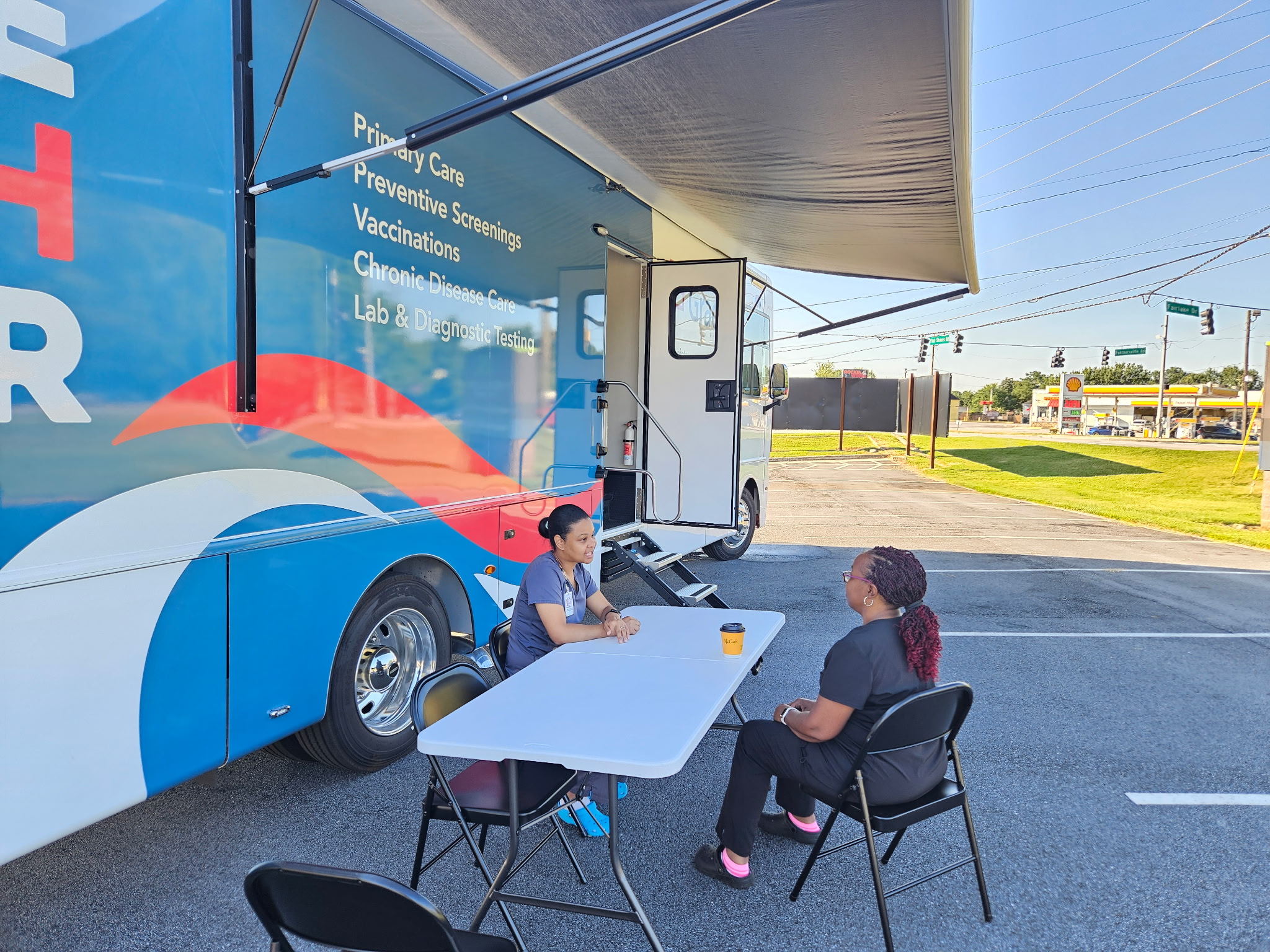
Community-based programs like free health screenings and mobile health clinics help detect health risks early and connect residents to care before conditions become financial crises.
When organizations provide early screenings and referrals, they are not simply offering medical support. They are protecting income, employment continuity, and housing stability.
At New Life Community Alliance (NLCA), this connection is central to how we serve our neighbors. Our work is rooted in a holistic model that recognizes that housing, education, employment, and health are deeply interconnected. Health screenings can identify issues before they become financial crises. Health education empowers families to manage chronic conditions. Mental health support helps individuals maintain stability during life’s challenges.
These services do more than improve individual well-being. They help create the conditions for long-term financial resilience.
A Holistic Approach to Thriving Communities
Despite progress, many communities in Georgia still face significant barriers to healthcare access. These barriers often include transportation challenges, limited nearby healthcare facilities, lack of insurance coverage, and the cost of preventative services.
When these obstacles persist, entire neighborhoods can experience cycles where health challenges and economic instability reinforce one another. This is why thriving communities require integrated solutions.
Through our Health and Wellness initiatives, we partner with healthcare providers to bring screenings, education, and resources directly to the community. Programs such as kidney disease screenings and health workshops help residents take proactive steps toward better health outcomes.
When combined with housing support, workforce development programs, and educational opportunities, these services form a powerful ecosystem of support.
For policymakers and community leaders, the takeaway is clear: investments in healthcare access are also investments in economic stability. When people can access the care they need, they are more likely to stay employed, maintain stable housing, and build financial security for their families.
Improving community health across Georgia strengthens the entire local economy and supports long-term financial stability. When organizations, healthcare providers, and advocates work together, we can move closer to a future where every neighbor, regardless of income or zip code, has the opportunity to thrive.